|
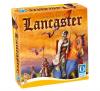
Lancaster

In 1413, the new king of England, Henry V of Lancaster, has ambitious plans: The unification of England and the conquest of the French crown! Each player takes the role of an ambitious aristocratic family. Who will be the best supporter of this young king, and the most powerful Lord of his time?
In Lancaster, the players want to proceed from simply being a Lord to being the most powerful ally of the king. They may achieve this by developing their own knighthood, as well as by clever deployment of individual knights in the counties of England, at their own castle, and to conflicts with France. In parliament, they try to push laws from which they will benefit themselves most. The player with the most power points at the end of the game is the winner.
Every turn, players send their knights to the different locations:
• Counties, where they compete with knights from other players for rewards and the favor of the nobles.
• The castle, to receive income or new knights.
• Into conflict with France, where all players combine their power and try to gain power points.
In the counties, the strength of the knights is important, as you can remove the knight of another player by placing a knight of your own with higher strength in the same location.
Minimum Age: 10
Minimum Players: 2
Maximum Players: 5
Boardgame Atlas: Link
|
Queen Games |
Medieval |
2011 |
1 |
|
Leaping Lemmings
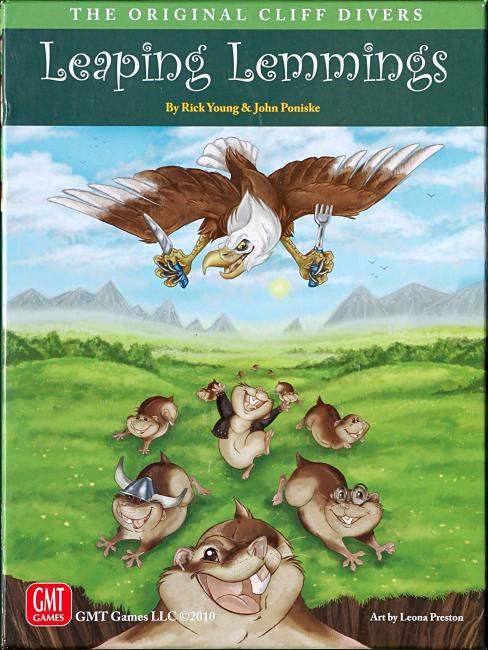
Leaping Lemmings - The Original Cliff Divers
Leaping Lemmings is a humorous game for 2-6 players. Each player controls a cloned clan of lemmings that have been specially trained to compete with the other lemming clans, all trying to scurry down a canyon and hurl themselves over a cliff. Distance and style points are important. One lemming diving with style and élan is worth as many as five of the more mundane divers. But beware the hungry eagles circling overhead or your lemmings might not even make the cliff edge!
Objective: The player with the most victory points wins the game. To earn victory points, players dive their lemmings over the cliff edge and/or collect Lemming Chow Pellets.
The game board is a hex-based map representing the canyon down which up to six separate lemming clans will travel. The canyon ends with the cliff edge hexes, which are the lemmings' ultimate goal. Between the lemmings and their goal there are two eagles circling overhead hoping for multiple lemming snacks.
Each turn a movement card is revealed which will allow for 2-5 lemming movement points. Card luck is mitigated in that all players use the same card to move that turn. Only the top lemming in each stack is allowed to move, so covering your opponents' lemmings is one tactic that is used to slow them down. The down side is that the top lemming in each stack is the only one in danger of becoming eagle chow.
Special Actions allow players to briefly alter the normal rules of the game to…
Minimum Age: 13
Minimum Players: 2
Maximum Players: 6
Boardgame Atlas: Link
|
GMT Games |
Animals, Humor |
2010 |
1 |
|
Lewis & Clark: The Expedition
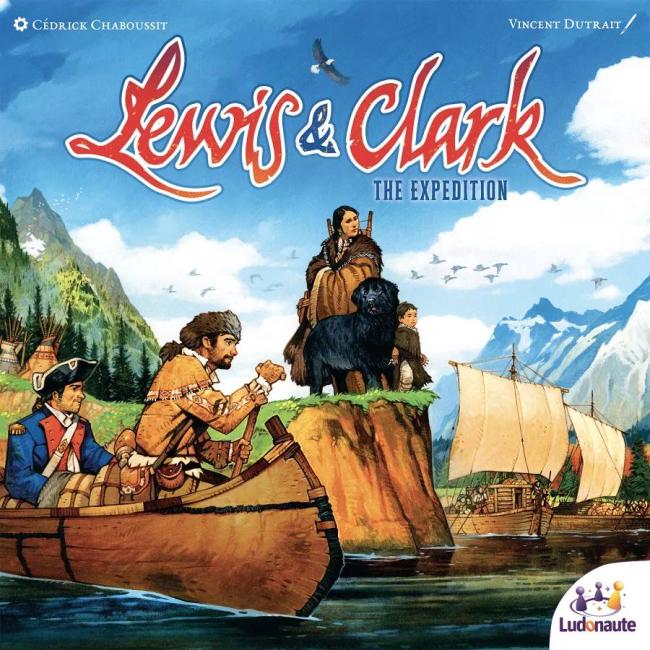
On November 30, 1803, the United States purchased Louisiana from Napoleon. U.S. President Thomas Jefferson decided to send two explorers – Meriwether Lewis and William Clark – to discover this huge terra incognita.
Lewis & Clark is a board game in which each player manages an expedition intended to cross the North American continent. Their goal is to be the first to reach the Pacific. Each one has his own Corps of Discovery that will be completed by the Native Americans and the trappers met during the journey. He has to cleverly manage his characters and also the resources he finds along the way. Beware, sometimes frugality is better than abundance.
Lewis & Clark features dual use cards. To be activated, one card must be combined with another one, which becomes unavailable for a while. Thus, players are faced with a constant dilemma: play a card or sacrifice it. During the game, each player acquires character cards that enlarge his hand, building a crew that gives him more options but it needs to be optimized as he will recycle his cards more slowly. This new "handbuilding" mechanism fits strongly with the historical background.
Since the aim of the game is to be the first on the Pacific coast, the timing and the opportunistic use of the other players' positions are crucial.
Minimum Age: 14
Minimum Players: 1
Maximum Players: 5
Boardgame Atlas: Link
|
Ludonaute |
American West, Exploration |
2013 |
1 |
|
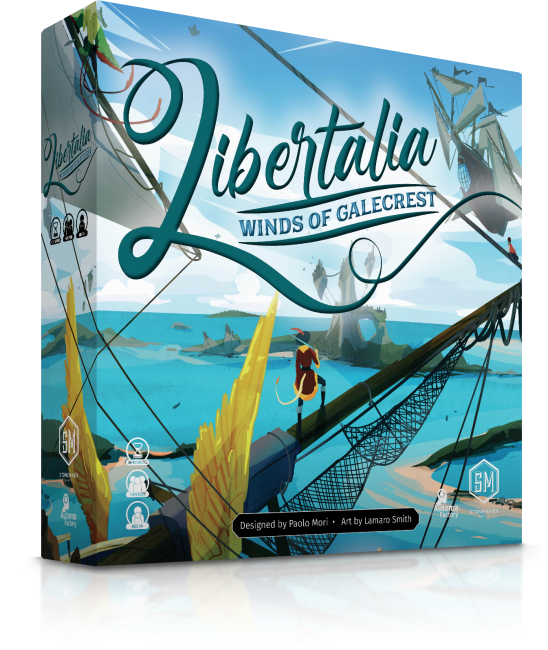
Libertalia: Winds of Galecrest
In the world of Galecrest, sky pirates set sail on the winds in search of adventure, treasure, and glory. As an admiral, you command a vast and varied crew...but so do your rivals sailing other ships in the pirate fleet. Each day the fleet lands on a different island where you'll send a crew member to collect your share of the loot, hoping they'll return to boost your growing group of characters.
Libertalia was originally released in 2012. Ten years later, Libertalia: Winds of Galecrest celebrates the foundations of the original design with a revised and expanded edition that includes all-new art, 40 characters per player, a reputation system to resolve tiebreakers, deluxe loot tokens, a robust solo mode, and much more.
- From Publisher
Minimum Age: 14
Minimum Players: 1
Maximum Players: 6
Boardgame Atlas: Link
|
Stonemaier Games |
Pirates |
2022 |
1 |
|
Linko
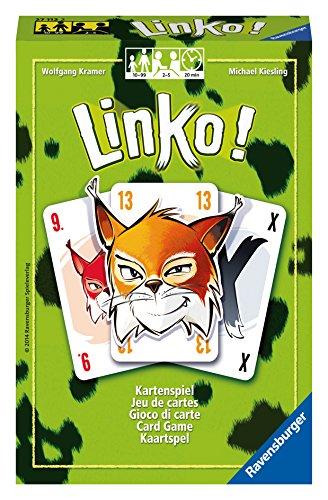
In Linko! (a.k.a. Abluxxen), you take turns playing number cards, and the more cards of the same number you play, the better as cards score points at the end of the game. If someone else plays the same amount of cards with a higher number, however, your cards get nicked! Stealing cards can be good, but if you can't use them later, and end the game with cards in hand, they'll cost you points.
In more detail, the deck contains 104 number cards (1-13 x8) and five joker cards. Each player starts with a hand of 13 cards, and six cards are laid face-up next to the deck. On a turn, a player lays down one or more cards of the same value, adding jokers if desired; if she already has cards on the table, she lays these cards so that previously played cards are still visible. If any opponent has most recently played the same number of cards and those cards are of a lower value, then the active player "abluxxes" those opponents — that is, the active player can take the abluxxed cards into her hand and the opponent then draws the same number of cards, either from the display or the deck; if she doesn't take these cards in hand, then the opponent either returns these cards to his hand or discards them and draws that many cards. Refill the display only after someone finishes drawing cards. (Jokers can be played on their own, and they are considered to be higher than all values.)
As soon as the deck runs out of cards or a player has no…
Minimum Age: 10
Minimum Players: 2
Maximum Players: 5
Boardgame Atlas: Link
|
Ravensburger |
Card Game |
2014 |
1 |

|
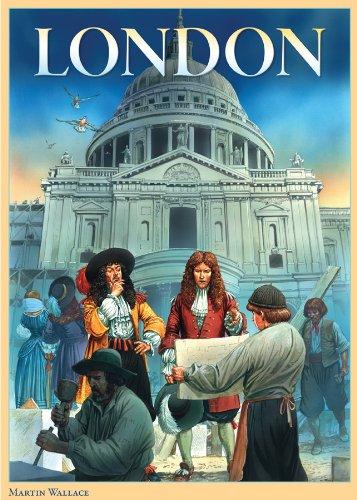
London
London lies devastated after the Great Fire of 1666. This is your opportunity to build a new city on the ashes of the old. It is up to you how you employ the talents of the people of London to this end. Will you favor the business classes, who will earn you money? Or would you prefer to spend more money than you can rightly afford on grand monuments and sumptuous palaces? You must also deal with the problem of rising poverty and the how to employ the many paupers of the city. Throughout the game you will be forced to make tough decisions. To achieve one aim you must sacrifice another, which may open an opportunity for a competitor. Almost 250 years of the city's history is recreated in this game. Many of the most famous buildings and monuments are captured in detail on illustrated cards. These elements are presented in a relatively simple game that can be played easily within ninety minutes.
Minimum Age: 14
Minimum Players: 2
Maximum Players: 4
Boardgame Atlas: Link
|
Treefrog Games |
City Building, Economic |
2010 |
1 |

|
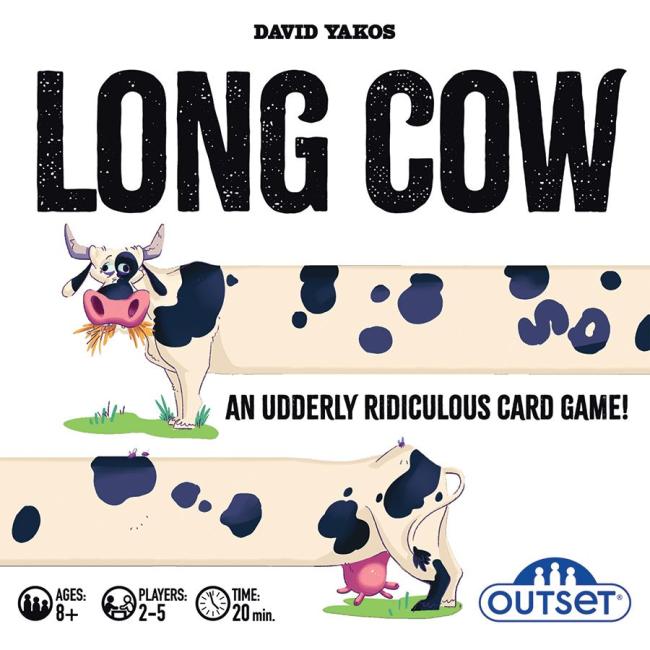
Long Cow
Long Cow is the moo-mentous card game of competitive cattle construction! Build cows by collecting heads, tails, and middles from the deck. The longer the cow, the more points you score. Bolster your barn with holy cows, robot cows, and even a cross-bred Franken-cow — but make hay before your herd is hit by a tornado, or worse, an alien abduction! Round up the biggest bovines and party like the cows came home!
—description from the publisher
Minimum Age: 8
Minimum Players: 2
Maximum Players: 5
Boardgame Atlas: Link
|
Game Factory |
Animals, Card Game |
2018 |
1 |

|
Lords of Waterdeep
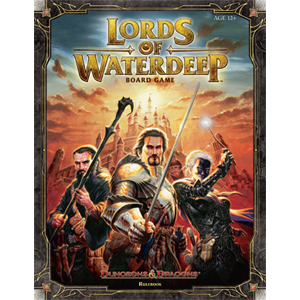
Waterdeep, the City of Splendors – the most resplendent jewel in the Forgotten Realms, and a den of political intrigue and shady back-alley dealings. In this game, the players are powerful lords vying for control of this great city. Its treasures and resources are ripe for the taking, and that which cannot be gained through trickery and negotiation must be taken by force!
In Lords of Waterdeep, a strategy board game for 2-5 players, you take on the role of one of the masked Lords of Waterdeep, secret rulers of the city. Through your agents, you recruit adventurers to go on quests on your behalf, earning rewards and increasing your influence over the city. Expand the city by purchasing new buildings that open up new actions on the board, and hinder – or help – the other lords by playing Intrigue cards to enact your carefully laid plans.
During the course of play, you may gain points or resources through completing quests, constructing buildings, playing intrigue cards or having other players utilize the buildings you have constructed. At the end of 8 rounds of play, the player who has accrued the most points wins the game.
Minimum Age: 12
Minimum Players: 2
Maximum Players: 5
Boardgame Atlas: Link
|
Wizards of the Coast |
City Building, Dungeons & Dragons, Fantasy |
2012 |
1 |
|
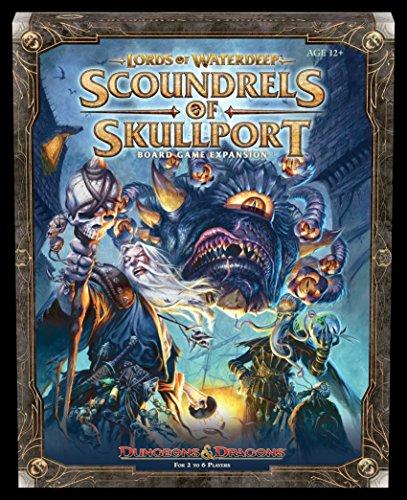
Lords of Waterdeep: Scoundrels of Skullport
Scoundrels of Skullport adds two new expansions to the Lords of Waterdeep board game -- Undermountain and Skullport -- inspired by the vast dungeon and criminal haven under Waterdeep. Players can choose to include one or both expansions in a Lords of Waterdeep game. The expansions also allow the addition of a sixth player.
The Skullport expansion adds a new resource to the game: Corruption. The Undermountain expansion features bigger quests and more ways to get adventures. Scoundrels of Skullport also includes new Lords, new Buildings, and set-up materials for a sixth player.
Minimum Age: 12
Minimum Players: 2
Maximum Players: 6
Boardgame Atlas: Link
|
Wizards of the Coast |
Dungeons & Dragons, Expansion |
2013 |
1 |
|
Lost Cities
Who will discover the ancient civilizations?
Two explorers embark on research journeys to remote corners of the world: the Himalayan mountains, the Central American rainforest, the Egyptian desert, a mysterious volcano, and the bottom of the sea. As the cards are played, the expedition routes take shape and the explorers earn points. The most daring adventurers make bets on the success of their expeditions. The explorer with the highest score after three rounds of expeditions wins. The rules of the game are simple, but beware: The lost cities hold many unseen mysteries!
Minimum Age: 10
Minimum Players: 2
Maximum Players: 2
Boardgame Atlas: Link
|
Thames & Kosmos |
Card Game, Exploration |
1999 |
1 |
|
Lost Legacy
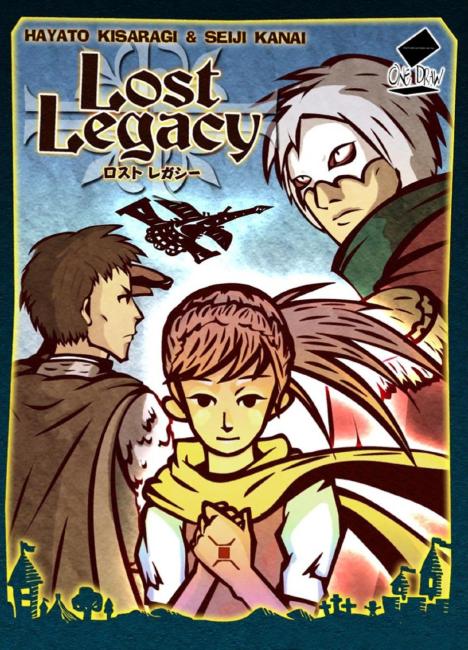
Lost Legacy, an official spin-off of Love Letter, includes two sets of 16 cards: The Starship and Flying Garden. Players can use one set or the other or combine them in various ways to alter the powers available in the game. Shuffle all the cards together (other than the second "Lost Legacy"), and you can include up to six players in the same game. Cards from Lost Legacy can also be combined with Lost Legacy: Hyakunen Senso to Ryu no Miko and Lost Legacy: Binbo Tantei to Inbo no Shiro.
Rules SummaryLost Legacy is a game of risk, deduction, and luck for 2–4 players. You start the game with one card in hand from a deck of sixteen cards. On a turn, you do the following:
Draw: Draw the top card from the deck and add it to your hand.
Play: Choose one of the two cards in hand to play and place it face up in front of you.
Effect: Carry out the played card's effect, after which the card is considered as discarded.
End: If there is at least one card left in the deck, the turn goes to the next player; if not, the investigation phase starts. Using the investigation speed indicated on the card each player has in hand, players take turns guessing which player (whether yourself or someone else) holds the "Lost Legacy" card; this card might also be in the "Ruins", a location that holds one card at the start of the game and possibly acquires more cards during play. The player who guesses correctly wins; if no one finds the Lost Legacy,…
Minimum Age: 10
Minimum Players: 2
Maximum Players: 6
Boardgame Atlas: Link
|
One Draw |
Bluffing, Card Game, Deduction |
2013 |
1 |
|
Lost Ruins of Arnak
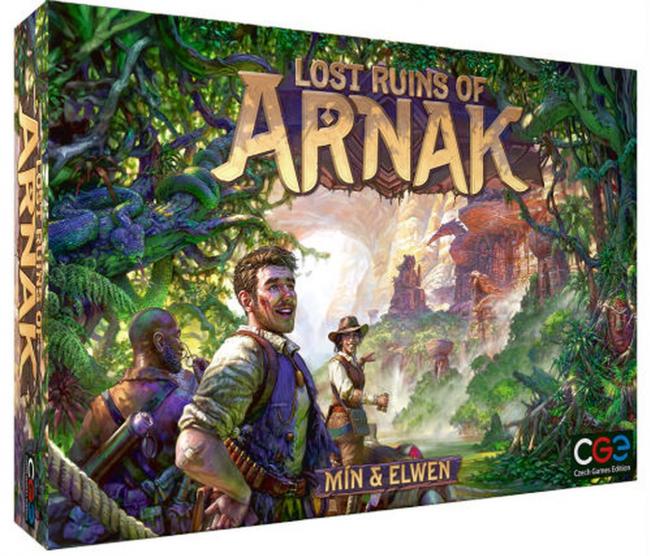
On an uninhabited island in uncharted seas, explorers have found traces of a great civilization. Now you will lead an expedition to explore the island, find lost artifacts, and face fearsome guardians, all in a quest to learn the island's secrets.
Lost Ruins of Arnak combines deck-building and worker placement in a game of exploration, resource management, and discovery. In addition to traditional deck-builder effects, cards can also be used to place workers, and new worker actions become available as players explore the island. Some of these actions require resources instead of workers, so building a solid resource base will be essential. You are limited to only one action per turn, so make your choice carefully... what action will benefit you most now? And what can you afford to do later... assuming someone else doesn't take the action first!?
Decks are small, and randomness in the game is heavily mitigated by the wealth of tactical decisions offered on the game board. With a variety of worker actions, artifacts, and equipment cards, the set-up for each game will be unique, encouraging players to explore new strategies to meet the challenge.
Discover the Lost Ruins of Arnak!
Minimum Age: 12
Minimum Players: 1
Maximum Players: 4
Boardgame Atlas: Link
|
Czech Games Edition |
Adventure, Ancient, Exploration, Travel |
2020 |
1 |

|
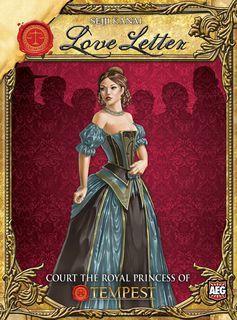
Love Letter
All of the eligible young men (and many of the not-so-young) seek to woo the princess of Tempest. Unfortunately, she has locked herself in the Palace, and you must rely on others to bring your romantic letters to her. Will yours reach her first? love letter is a game of risk, deduction, and luck for 2 to 4 players. Your goal is to get your love letter into princess Annette's hands while deflecting the letters from competing suitors. From a deck with only sixteen cards, each player starts with only one card in hand; one card is removed from play. On a turn, you draw one card, and play one card, trying to expose others and knock them from the game. Powerful cards lead to early gains, but make you a target. Rely on weaker cards for too long, however, and your letter may be tossed in the fire.
Minimum Age: 10
Minimum Players: 2
Maximum Players: 4
Boardgame Atlas: Link
|
Z-Man Games |
Card Game |
2012 |
2 |

|
Love Letter: Batman Version

Love Letter: Batman is a game of risk, deduction, and luck for 2–4 players based on the original Love Letter game by Seiji Kanai. The deck consists mostly of criminals, with Joker being the most valuable card at #8, Harley Quinn at #7, and so on, with Robin showing up at #4 and Batman as #1, which is the guard in the original Love Letter. Your goal is either to hold — that is, have captured — the highest valued card at the end of the round or to be the final player active in the round.
From a deck with only sixteen cards, each player starts with only one card in hand; one card is removed from play. On a turn, you draw one card, and play one card, using the power on that card to expose others and (possibly) knock them out of the round. If you use Batman's ability to KO someone (other than Robin), you score one point, with points being tracked via Batsignal tokens. If you're the final player active in the round or the player with the highest card when the deck runs out, then you score a point.
The game ends following the round in which someone has seven or more points, and the player with the most points wins.
Minimum Age: 10
Minimum Players: 2
Maximum Players: 4
Boardgame Atlas: Link
|
Alderac Entertainment Group |
Card Game, Comic Book, Deduction |
2015 |
1 |
|
Machi Koro
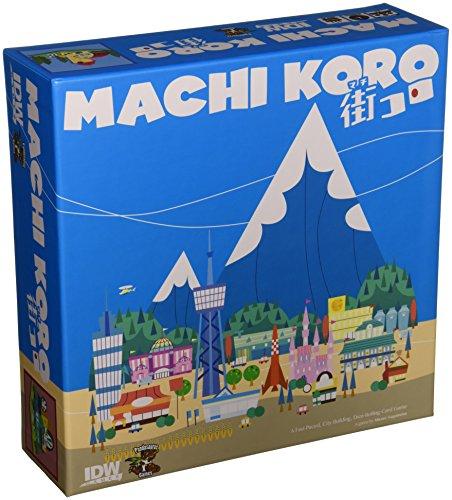
Nominated for the 2015 Spiel des Jahres award.
Machi Koro is a fast-paced, dice-rolling city builder. in the game, players compete to be the first person to build up their simple village into a sprawling metropolis. Originally designed and released in Japan, Machi Koro has developed a dedicated fan-base around the world. Excited fans have been eagerly anticipating an English translation, and the game has already garnered a "seal of excellence" from The Dice Tower among many other accolades.
Armed only with your trusty die and a dream, you must grow Machi Koro into the largest city in the region. You will need to collect income from developments and build public works, and steal from your neighbors coffers. Just make sure they aren't doing the same to you! Machi Koro is a fast-paced light-hearted game for you and up to 3 friends. They say you can't build Rome in a day, but Machi Koro will can be built in under 30 minutes!
Minimum Age: 10
Minimum Players: 2
Maximum Players: 4
Boardgame Atlas: Link
|
IDW Games |
Card Game, City Building, Dice |
2012 |
1 |
|
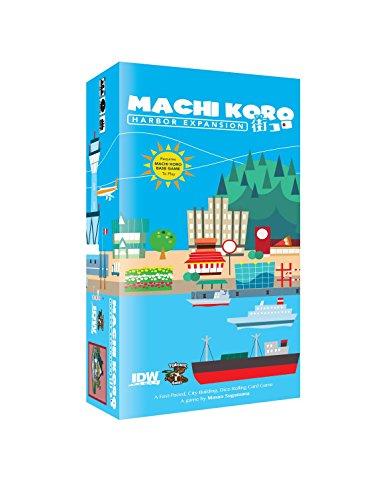
Machi Koro: Harbor Expansion
The first expansion for the wildly popular Japanese card game, Machi Koro, is here! Machi Koro: The Harbor Expansion adds 10 new establishments, one new starting establishment and two new landmarks (82 cards total). You will have access to powerful new cards like the Harbor, Airport, and more. Most importantly you will be able to add a fifth player to the game for the first time ever! With new mechanics and a new set-up variant, this expansion adds tons of variety to an already incredibly replayable game.
Minimum Age: 10
Minimum Players: 2
Maximum Players: 5
Boardgame Atlas: Link
|
IDW Games |
Card Game, City Building, Expansion, Dice |
2012 |
1 |
|
Madeira

Madeira is an island officially discovered early in the 15th century by Portuguese seafarers. Madeira, the Portuguese word for wood, refers to the dense forest that covered its wild, fertile landscape. This, and its strategic position far into the Atlantic Ocean made the island one of the most significant Portuguese discoveries. Madeira served as a “laboratory” for what would become the Portuguese Empire.
Wheat plantations were the first means for survival on the island. After that, when D. Henrique decided to increase the economy of the Empire, sugar became the core business of Madeira. Once sugar started coming from other places in the world, such as Africa and Brazil, profits from sugar were no longer enough, and production of the very famous Madeira wine became the most important economic product of the island.
Players try to adapt themselves to these constraints, working to find better fields for farming the right goods and for obtaining precious wood, essential for erecting new structures in the cities and for building ships. In turn, the ships are crucial for trading in foreign markets, as well as for taking part in new expeditions to discover other countries. Madeira has been established just as it was in the original administrative division of the island under 3 captaincies (Funchal, Machico, and Porto Santo), where the ultimate goal is to develop the Island, gaining the most prestige under and for the Portuguese Crown.…
Minimum Age: 12
Minimum Players: 2
Maximum Players: 4
Boardgame Atlas: Link
|
What's Your Game |
Dice, Economic, Farming, Nautical |
2013 |
1 |
|
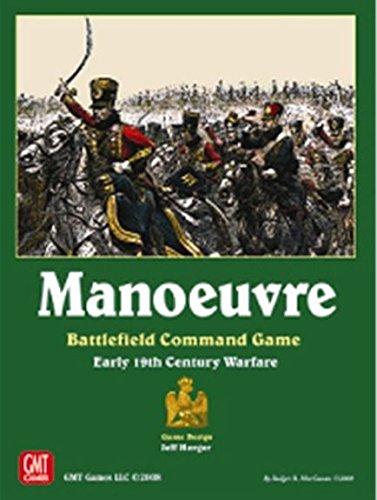
Manoeuvre
Manoeuvre is a fast-playing game of battlefield command, set in the early 19th century. Multiple geomorphic game maps provide the chessboard-sized battlefields over which eight different armies of the period (France, Britain, Russia, Spain, Austria, Turkey, Prussia, and the US) clash. Each country has 8 units and a deck of cards specific to the country. move and fight in one-on-one battles. As the commanding General of a nation's army, you have at your command units and a 60-card national deck which represents your army's specific troops and unique strengths. Your job is to utilize those assets and manoeuvre your forces to achieve battlefield supremacy.
Minimum Age: 10
Minimum Players: 2
Maximum Players: 2
Boardgame Atlas: Link
|
GMT Games |
Napoleonic, Wargame |
2008 |
1 |
|
Mansions of Madness: 2nd Edition
Mansions of Madness: Second Edition is a fully cooperative, app-driven board game of horror and mystery for one to five players that takes place in the same universe as Eldritch Horror and Elder Sign. Let the immersive app guide you through the veiled streets of Innsmouth and the haunted corridors of Arkham's cursed mansions as you search for answers and respite. Eight brave investigators stand ready to confront four scenarios of fear and mystery, collecting weapons, tools, and information, solving complex puzzles, and fighting monsters, insanity, and death. Open the door and step inside these hair-raising Mansions of Madness: Second Edition. It will take more than just survival to conquer the evils terrorizing this town.
Minimum Age: 14
Minimum Players: 1
Maximum Players: 5
Boardgame Atlas: Link
|
Fantasy Flight Games |
Adventure, Exploration, Fantasy, Fighting, Horror, Miniatures, Mystery, Puzzle |
2016 |
1 |

|
Maria

In October 1740, Charles VI, the German emperor and the Austrian head of state, dies. Succession falls on his oldest daughter, the 23 year old Maria Theresa. However, by Imperial law and tradition, women cannot succeed to the Imperial throne. Although the other states of Europe had agreed to Maria Theresa's succession only a few years before by signing the Pragmatic sanction, her enemies now regard Austria as easy prey. Bavaria and Saxony lay claim to large swathes of Hapsburg possessions. Supported by France, Bavaria is even claiming the Imperial title itself. And what could be easier to achieve? Austria is isolated and ruled by a young, inexperienced, and, it is assumed, weak woman.
In December 1740, the War of the Austrian Succession finally breaks out. Seizing the opportunity, Frederick II of Prussia - himself King for only six months - invades the Austrian province Silesia, driven by his ambition for power and personal glory. The Prussian surprise attack takes Silesia with scarcely a fight. In Spring 1741, Bavaria, Saxony and France take up arms as well. Engulfed by this wave of attacks, Austria seems doomed. However, the attackers have underestimated Maria Theresa, her strength of character, and her fierce tenacity. Against the advice of her ministers, she is not willing to give up the smallest part of her heritage.
Minimum Age: 14
Minimum Players: 2
Maximum Players: 3
Boardgame Atlas: Link
|
Rio Grande Games |
Age of Reason, Bluffing, Negotiation, Political, Wargame |
2009 |
1 |

|
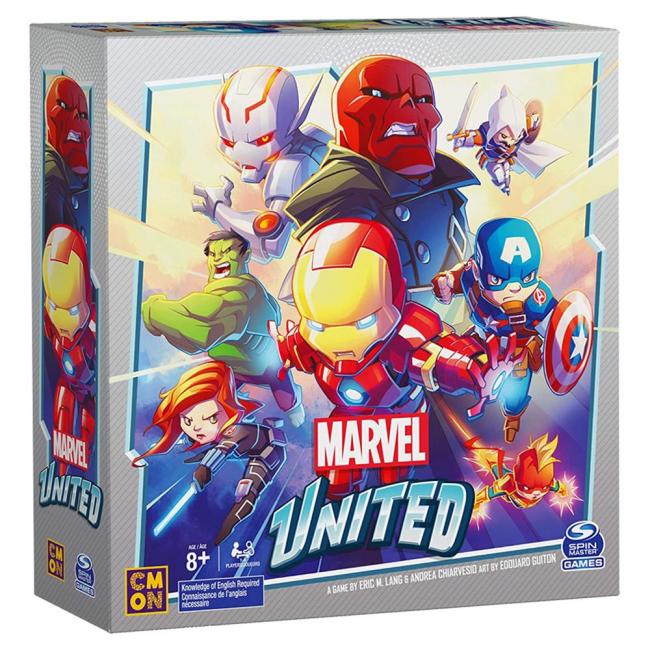
Marvel United
Will the Heroes Prevail Against Nefarious Supervillains? Red Skull, Ultron, and Taskmaster are attacking the city, each with their own evil scheme for destruction and domination. To stop them, superheroes like Captain America, Iron Man, and Captain Marvel are joining forces. In the end, will the combined efforts of these heroes be enough to save the world?
In Marvel United, players must work together to stop the plans of an evil Supervillain. They will use each hero’s custom deck of powers and abilities, playing off the strengths of one-another for added effect, as they try and finish missions and take out the villain before it’s too late. They’ll battle in locations all around the city. In the end, either the city will be saved, or the world will be doomed.
Minimum Age: 14
Minimum Players: 1
Maximum Players: 4
Boardgame Atlas: Link
|
CMON Limited |
Card Game, Comic Book / Strip, Fighting, Kickstarter |
2020 |
1 |
|
Masters of Maple Syrup
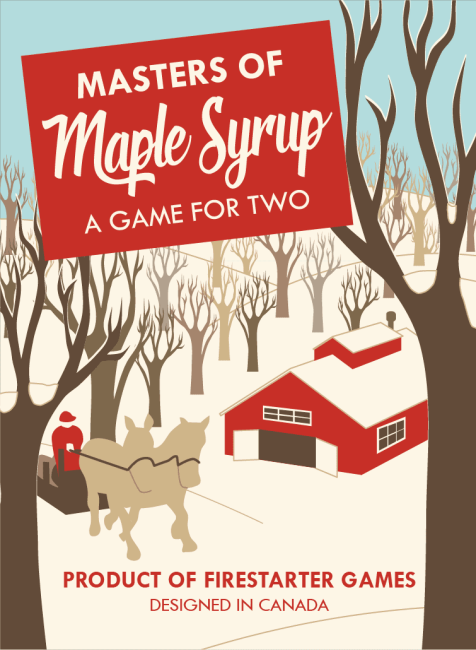
It's sugaring season on the Canadian Shield! Tap trees, boil sap into syrup and develop your tiny acreage into the finest maple farm in the province. Bound by the code of neighbourly conduct, the actions you take will also help your opponent but at the end of the season, there can only be one Master of Maple Syrup.
In Masters of Maple Syrup, players develop their property tableaus by adding trees to harvest sap from and utilities to improve their syrup production. On their turn, the active player determines the action both players will take, with a slight advantage in their favour.
The game ends at the end of a round where any player has placed 10 cards on their property (tableau). Scores are tallied from the value of cards on each players’ properties and any additional scoring bonuses the cards offer. The player with the highest value on their property wins.
Time your actions and develop a property to best benefit from your neighbour's actions in a cozy cabin game for two.
Minimum Age: 8
Minimum Players: 2
Maximum Players: 2
Boardgame Atlas: Link
|
Firestarter Games |
Card Game, Farming |
2022 |
1 |

|
Matcha
The Japanese tea ceremony is a tradition centred on spirituality and servitude. Preparing and presenting a beautiful matcha (tea) for your guest is the ultimate expression of culture, ceremony and respect.
In Matcha, players attempt to collect the utensils (chadogu) they need to perform a tea ceremony by matching tea ceremony (otemae) cards on the table by either their number (1-4) or suit (tea, water, bowl, & scoop.) Cards are played secretly, and sometimes it will be to your advantage not to match at all.
With just 18 otemae cards and an assortment of chadogu tokens, Matcha provides plenty of strategy for players who must decide when and where to play their cards to the table.
Minimum Age: 10
Minimum Players: 2
Maximum Players: 2
Boardgame Atlas: Link
|
Grail Games |
Bluffing, Card Game |
2015 |
1 |
|
Medina
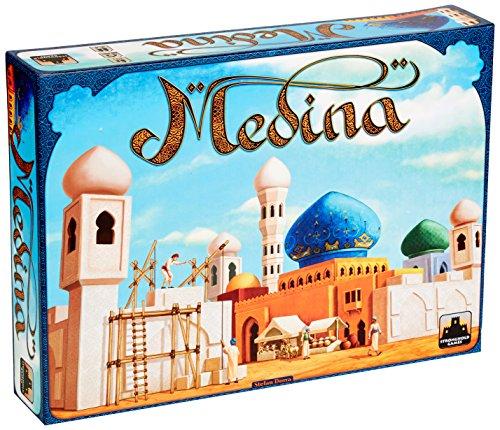
The year is 1822. After years of decay, it is time to rebuild the medina, located at the foot of the Atlas Mountains. As an engineer of the city, you work to erect large, beautiful palaces, and to renovate the damaged city wall. As the reconstruction of the old city progresses, the inhabitants flock through the alleys, and the contours of the new city gradually reappear! In Medina, players take turns placing pieces on the board, either adding to an existing building or starting a new building. Players will score points by claiming one building of each of the four colors, by owning the largest buildings, and by getting bonuses for most recently connecting walls to buildings. Medina is a reprint of a highly-sought after game originally published by Rio Grande Games in 2001. This latest edition features a double-sided game board (enabling two-player games), almost 200 detailed wooden pieces, and components never before published for this game!
Minimum Age: 10
Minimum Players: 2
Maximum Players: 4
Boardgame Atlas: Link
|
Publisher Services Inc (PSI) |
Abstract, City Building |
2014 |
1 |

|
Mind Up!
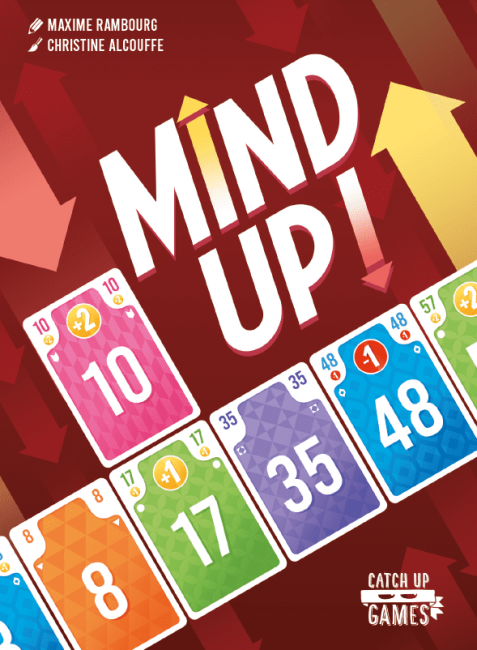
In Mind Up!, you start with a line of cards on the table, with as many cards as players. Each turn, players pick a card from their hand and simultaneously reveal it to make a new line, ordered from the lowest to the highest card. Each player then takes the card in the previous line at the same position as the one they just played, adding it to their tableau. These cards will score points at the end of the round, depending on their color and the order they were picked. After being scored, they become the player's hand for the next round.
Minimum Age: 8
Minimum Players: 3
Maximum Players: 6
Boardgame Atlas: Link
|
Catch Up Games |
Card Game, Number |
2023 |
1 |

|
Modern Art
Beauty is in the eye of the beholder, but in the high-stakes world of fine art auctions, there's nothing more beautiful than making a buck.
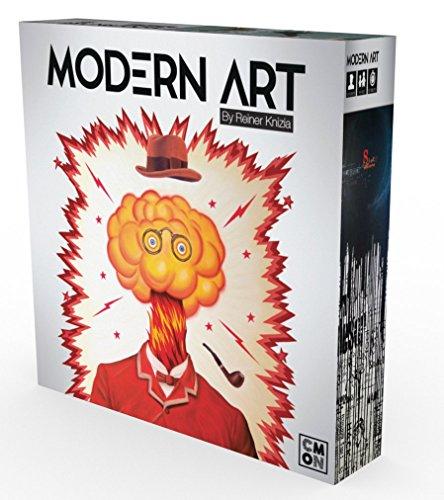
In Modern Art, players take on the role of curators, buying and selling paintings for their museum. Over the course of four rounds, they take part in a number of auctions, trying to get the best value for the pieces in their collection. Whoever makes the most money wins the game (and keeps their job).
Minimum Age: 14
Minimum Players: 3
Maximum Players: 5
Boardgame Atlas: Link
|
CMON |
Card Game, Economic |
1992 |
1 |
|
Mr. Jack
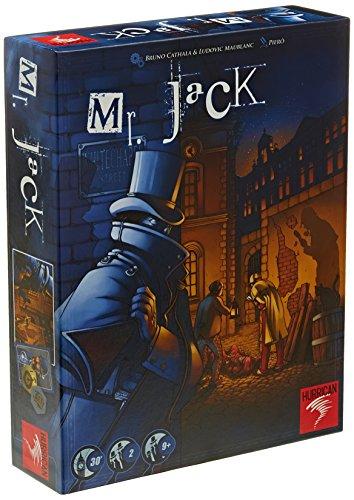
London 1888. Whitechapel District. 00.25am As usual too much fog. Then a shout? A victim? Jack struck again and the hunt still continues. Finally 8 investigators have come together to try to uncover the mystery, but can they uncover it before he strikes again? Mr. Jack is his name and he is a crafty one and he won't stop until he is caught!
Minimum Age: 9
Minimum Players: 2
Maximum Players: 2
Boardgame Atlas: Link
|
Hurrican |
Deduction, Mystery |
2006 |
1 |
|
Mutants
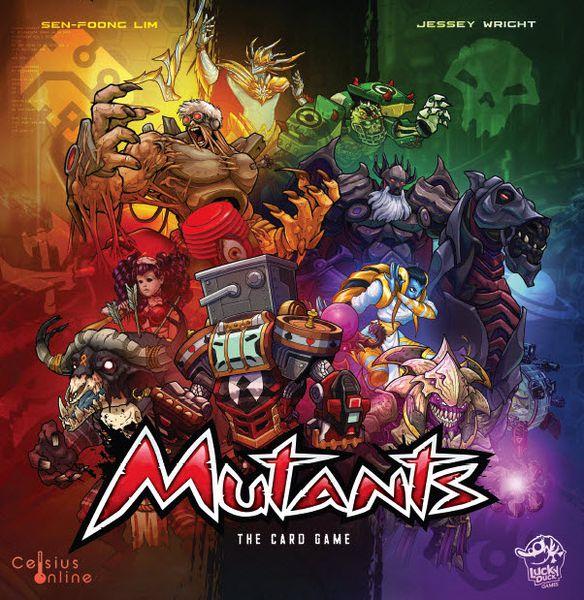
In Mutants, 2-4 players have to mix and match genetics to create the ultimate warriors and demonstrate their prowess in the arena. By dominating in the arena and freezing the most valuable mutants, you gain prestige — and whoever collects the most prestige wins.
In each round, players take turns until all players have used every card in their hand. At the end of the round, the player whose token is closest to the top space of the arena track scores prestige based on the round track. The game proceeds in this way for five rounds, after which players reveal their archives and gain additional prestige based on the freeze value of the mutants they have placed there.
In more detail, on your turn you perform three steps. First, you check to see whether you crushed the competition, then you ready your mutants in play, then you take one action from the following three:
- Breed: Gain a new mutant card to use in battle this round.
- Incubate: Prepare a new mutant card to use in battle next round.
- Deploy mutant: Play a mutant from your hand to your active mutant slot.
Minimum Age: 10
Minimum Players: 2
Maximum Players: 4
Boardgame Atlas: Link
|
Lucky Duck Games |
Card Game, Fighting, Video Game Theme |
2019 |
1 |
|
My First Carcassonne
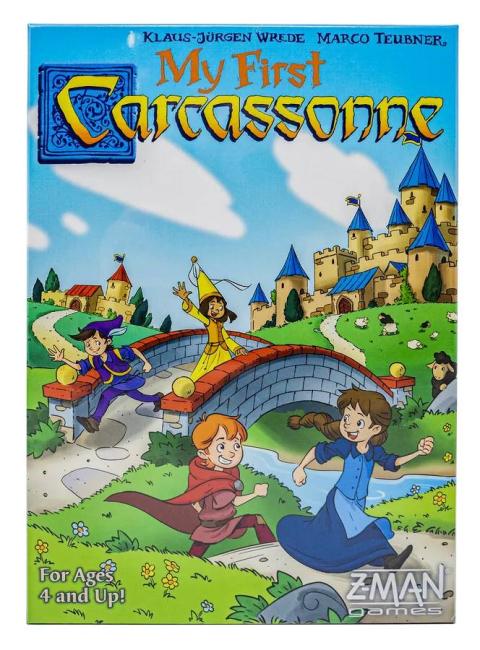
Story: On 14 July, the national holiday in France, the sheep, chickens and cows are set free in the town of Carcassonne. The children have great fun to catch the animals before dusk.
In Carcassonne Junior, a.k.a. My First Carcassonne, the players in turn draw a landscape tile and place it; unlike in normal Carcassonne, they always match. Amongst other features, the tiles show children in the player colors on the roads. Whenever a road is finished, every player places one of their meeples on each appropriate picture.
The first player who manages to place all of their meeples wins.
Minimum Age: 4
Minimum Players: 2
Maximum Players: 4
Boardgame Atlas: Link
|
Hans im Gluck (Germany) |
Children's Game, Medieval |
2009 |
1 |
|
My First Stone Age
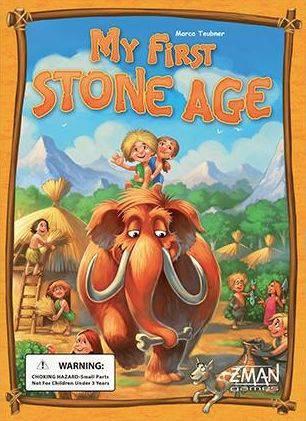
Travel to the past with Jonon and Jada, two stone age children, to rediscover how the first humans settled the world around them.
In My First Stone Age, a children's version of the Stone Age family game, the players collect goods and build their own settlement.
Players first explore the location of forest tokens surrounding the village. Flipping a forest token over indicates the movement of the player's meeple to an action spot on the board. Gather or trade resources, visit the construction site or get a helper token for the kid's dog Guff who will fetch any resource when it's time to build a hut. The construction site is where huts can be build. Each requires a different set of resources. A visit the to construction site also resets the forest tokens: Flip the tokens back over and swap a couple of them to introduce some challenge.
Use your memory to find the fastest paths to gather resources and built 3 huts before everyone else to be the winner of My First Stone Age.
Minimum Age: 5
Minimum Players: 2
Maximum Players: 4
Boardgame Atlas: Link
|
Hans im Gluck (Germany) |
Children's Game, Prehistoric |
2016 |
1 |

|
My Little Pony: Festival of Lanterns
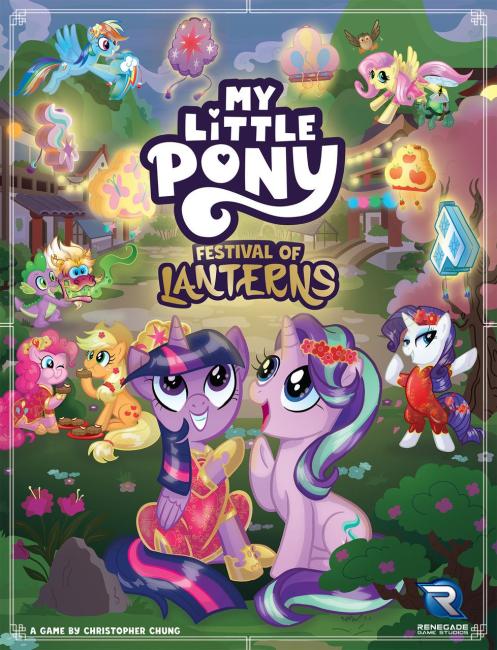
Join Twilight Sparkle and her friends as they visit Mistmane's Eastern Village, where they will celebrate all of their accomplishments in restoring Equestria to its peaceful ways by releasing Cutie Mark lanterns. As the glowing lanterns rise up to form patterns in the sky, they all can feel the magic of friendship abound!
In My Little Pony: Festival of Lanterns, players have a hand of tiles depicting various color arrangements of floating lanterns, as well as an inventory of individual lantern cards of specific colors. When you place a tile, all players — both you and your opponents — receive a lantern card corresponding to the color on the side of the tile facing them. Trade mooncake tokens for new lantern cards, and return lantern cards to claim a dedication tile worth points. After all tiles have been placed, all players get one final turn, then whoever has the most points wins.
My Little Pony: Festival of Lanterns features gameplay similar to Christopher Chung's earlier game Lanterns: The Harvest Festival with some modifications, including a solo mode and a "Gala" expansion in which you add up to four friend cards to the game from the sixteen included; on a turn, you can now spend mooncakes to use the power of a friend to fain a bonus lantern, make a second dedication on a turn, force someone else to trade lanterns with you, and so on.
Minimum Age: 14
Minimum Players: 1
Maximum Players: 4
Boardgame Atlas: Link
|
Renegade Game Studios |
Abstract Strategy, Movies / TV / Radio theme |
2025 |
1 |
|
Mycelia
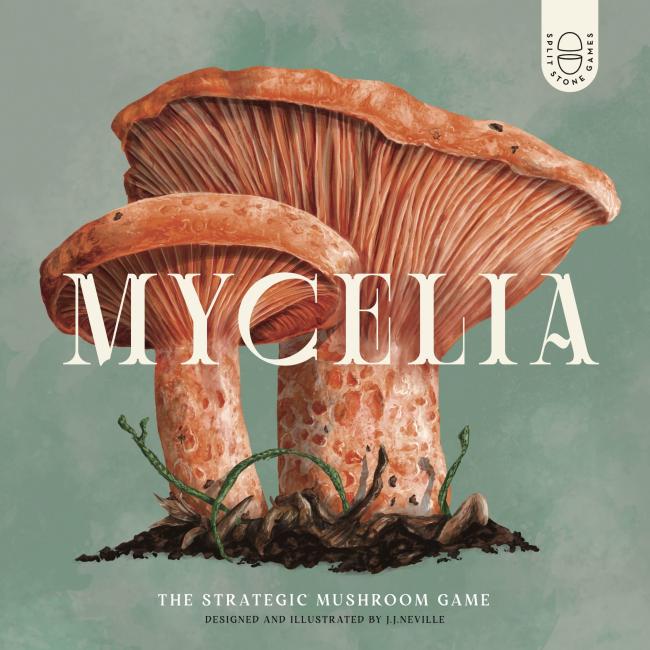
Mycelia is a dynamic game of tactics in a competition for space and resources to create your own mushroom kingdom. The game follows the life cycle of fungi, a journey of creation, expansion, death, and rebirth — in game terms, growing mushrooms to score points, sporing them to expand your mycelial network, and eventually seeing them decay to unlock special actions.
On a turn, a player has two actions to perform from the six options available. Using your decay actions, stealing spores, and blocking other mushrooms are just some of the ways to get ahead in the game. Players can evolve their own playing style, perhaps playing more aggressively to steal other players' spores or disrupt their mycelial network — or perhaps playing more defensively to try to protect their own area and spores.
The board is made up of triangle tiles that represent different environments and nutrients that the mushrooms need to grow. These tiles can be added to the board by the players, so the board is always growing and evolving.
Mycelia incorporates beautiful and accurate botanical style illustrations with over 69 mushrooms that can be found in the wild.
—description from the publisher
Minimum Age: 10
Minimum Players: 1
Maximum Players: 4
Boardgame Atlas: Link
|
Split Stone Games |
Environmental |
2024 |
1 |
|
Myrmes
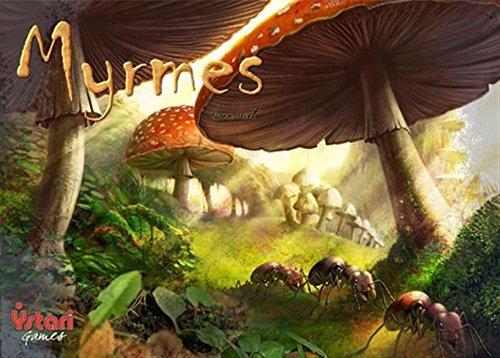
In Myrmes, players control ant colonies and use their ants to explore the land (leaving pheromones in their wake); harvest "crops" like stone, earth and aphids; fight with other ants; complete requests from the Queen; birth new ants; and otherwise dominate their tiny patch of dirt, all in a quest to score points and prove that they belong at the top of the heap, er, anthill. After three seasons of scrabbling and foraging, each ant colony faces a harsh winter that will test its colonial strength.
In game terms, each player has an individual game board to track what's going on inside his colony – that is, whether the nurses are tending to larvae or doing other things, where the larvae are in their growth process, what resources the colony has, which actions are available to workers when they leave the colony, and so on. The shared game board shows the landscape outside the exit tunnel that all colonies share; after exiting this tunnel, workers ants can move over the terrain to place pheromones (which gives them access to resource cubes), clean up empty pheromones (to make space), hunt prey (by discarding soldiers) or place special tiles (but only if they've developed the ant colony).
The game lasts three years, and at the start of each year three season dice are rolled to determine the event for each season: extra larvae or soldiers, more VPs for actions, and so on. Within each season, players can spend larvae to adjust the event…
Minimum Age: 13
Minimum Players: 2
Maximum Players: 4
Boardgame Atlas: Link
|
Ystari Games |
Animals, Environmental, Farming |
2012 |
1 |
|
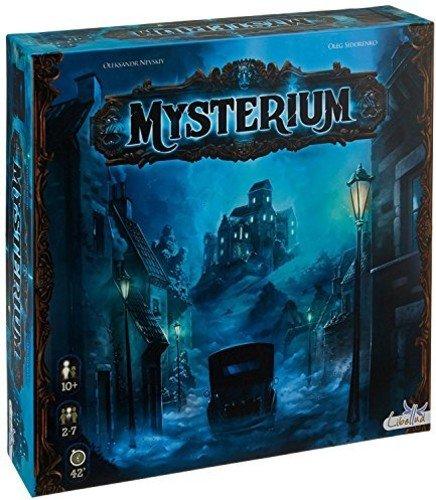
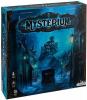
Mysterium
A horrible crime has been committed on the grounds of Warwick Manor and it's up to the psychic investigators to get to the bottom of it.
In Mysterium, one player takes on the role of the ghost and over the course of a week, tries to lead the investigators to their culprit. Each night the team will be met with visions, but what is the ghost trying to tell you? Can the psychics determine the weapon, location and killer or will a violent criminal pull off the perfect murder?
Minimum Age: 10
Minimum Players: 2
Maximum Players: 7
Boardgame Atlas: Link
|
Asmodee Editions |
Deduction, Party Game |
2015 |
1 |
|
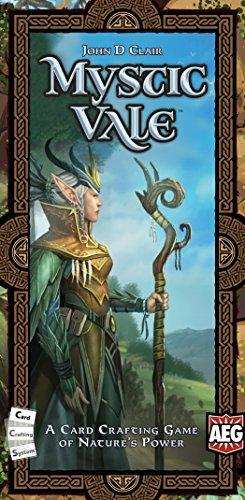
Mystic Vale
"I really love this one. It's fantastic! If you like Dominion, you're going to love this game. Into my collection!"
- Tom Vasel, The Dice Tower
A curse has been placed on the Valley of Life. Hearing the spirits of nature cry out for aid, clans of druids have arrived, determined to use their blessings to heal the land and rescue the spirits. It will require courage and also caution, as the curse can overwhelm the careless who wield too much power.
In Mystic Vale, players take on the role of druidic clans trying to cleanse the curse upon the land. Each turn, you play cards into your field to gain powerful advancements and useful vale cards. Use your power wisely, or decay will end your turn prematurely. Score the most victory points to win the game!
Mystic Vale features an innovative Card Crafting System that creates a game experience like you've never played before!
Minimum Age: 8
Minimum Players: 2
Maximum Players: 4
Boardgame Atlas: Link
|
Alderac Entertainment Group |
Card Game, Fantasy |
2016 |
1 |
|
Nagaraja
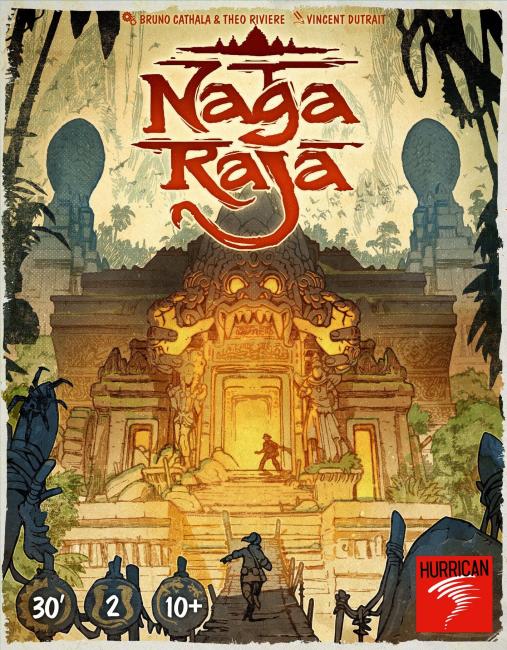
Twin temples of two forgotten divinities containing ancient relics have been discovered in India. You set off on a treasure hunt, racing to find them before your rival, but your progress is slowed by a constantly shifting maze of paths… And eternal damnation awaits anyone foolish enough to uncover the three cursed relics of the evil god Garuda!
MOVE QUICKLY...CHOOSE WISELY! A treasure race packed with tough choices, twists & turns!
In this 2-players game, each player moves around their own temple, which has spaces for room tiles and hiding places for 9 sacred and cursed relics around. These relics are placed randomly, facedown, around the temples and worth victory points once flipped face up. The first player to score 25 victory points wins the game. However, a player loses if they reveal all three cursed relics! Each round, the players compete to win a new room tile by using cards allowing them to throw fate sticks. The player with the most fate points showing on their sticks wins the room tile and places it in their temple. Each player attempts to create paths leading to their relics, enabling them to flip them face up and score victory points. Yet, Naga symbols on some sticks let you activate cards with powerful effects, so that you can never take anything for granted…
Minimum Age: 10
Minimum Players: 2
Maximum Players: 2
Boardgame Atlas: Link
|
Hurrican |
Adventure, Bluffing, Exploration, Maze |
2019 |
1 |
|
Nations: The Dice Game
Nations: The Dice Game is a dice-driven variant of the civilization building game Nations. As in the original game, every player strives to build the mightiest and most successful civilization, each on their respective game board. Familiar features include civilian-and military buildings, advisors, colonies, and wonders. The available buildings are defined by the players' dice, and the resources they "produce". Advisors, colonies and wonders give points and chips that may once per turn be exchanged for rerolls or resources.
Nations: The Dice Game is a game for 1-4 players that takes 10-15 minutes per player and shares many concepts with the civilization-building game Nations while still offering its own challenges.
Minimum Age: 14
Minimum Players: 1
Maximum Players: 4
Boardgame Atlas: Link
|
Stronghold Games |
Ancient, Civilization, Dice, Medieval, Renaissance |
2014 |
1 |
|
Neuroshima Hex
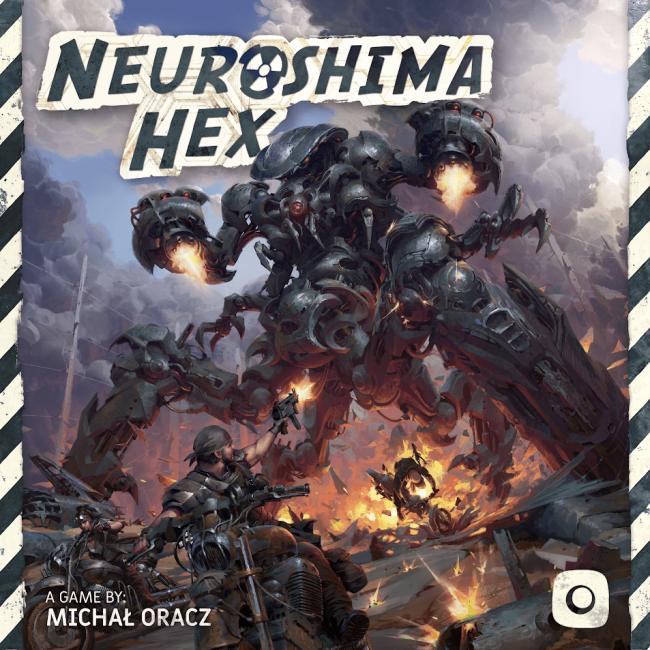
Neuroshima Hex! is a strategy game set in the post-apocalyptic world of Neuroshima, a Polish role-playing game. Each player leads one of four armies: Borgo, Hegemonia (Hegemony), Moloch, and Posterunek (Outpost). Each army deck consists of 34 tiles: soldiers, support tiles, and special actions. You win when all enemy headquarters are destroyed or when your headquarters is the least damaged at the end of the game.
In 2007 and 2013, the game had graphical facelifts, somewhat modifying the iconography. Note: each army (whether base game or expansion) is compatible with every version (1.0, 2.x, 3.0). Only the art styles and icon graphics differ mildly.
The game had different editions with different components/bonuses alongside the 4 base armies (big board, bonus army, puzzles, etc.). See different editions for details.
Tile width and thickness strongly varied depending on edition, and even on a same editor slightly varied over the years. This does not affect play, but may affect some storage solutions.
Due to multiple versions and expansions, see the Neuroshima Hex! english FAQ
The game is also expanded by Unofficial Neuroshima Hex! expansions, available here on BGG.
Note: There is no solitaire bot/AI/system to compete against. The only options for "solo" play are soloing multiple factions yourself, or solving puzzles (like Chess checkmate problems) available in some editions and expansions.
Minimum Age: 8
Minimum Players: 2
Maximum Players: 4
Boardgame Atlas: Link
|
Portal Games |
Collectible Components, Fighting, Puzzle, Science Fiction |
2006 |
1 |
|
Nexus Ops
Nexus Ops is a light-medium science fiction war game. The game boasts a hexagonal board that is set up differently every time, as well as (in the Avalon Hill edition) cool "glow" miniatures and lots of combat. Players control competing futuristic corporations that battle each other for control of the moon's Rubium Ore. By winning battles and fulfilling Secret Missions, you can obtain victory points.
Units are composed of various alien races and have stats similar to those used in the Axis & Allies series. Combat is also similar. Players who lose battles are compensated with Energize cards which grant them special powers later. Players can also obtain Energize cards by controlling the Monolith, a raised structure in the center of the grid. The first person to reach the required number of victory points wins the game.
Minimum Age: 12
Minimum Players: 2
Maximum Players: 4
Boardgame Atlas: Link
|
Fantasy Flight Publishing |
Exploration, Fighting, Science Fiction, Wargame |
2005 |
1 |
|
Nippon

Japan during the Meiji Dynasty: a closed isolated feudal country decides to change into a modern westernized state. The Empire sends emissaries to foreign nations, brings technicians and scholars from the west, builds railroads, invests in education, and achieves an outstandingly fast industrial revolution.
The nation and Emperor count on the support of the Great Four, the big conglomerates that emerge with great power and massive control over the Japanese economy. They are called Zaibatsu, and their influence on the Meiji Emperor and importance on the faith of Japan became incredibly high.
In Nippon, players control Zaibatsu and try to develop their web of power by investing in new industries, fighting for monopolies, taking part of government investments, and building up their influence and power as they oversee the era of rapid industrialization in Japan. Japan's unique social and geographic characteristics make this process a challenging endeavor. Natural resources are scarce, differences between the islands dramatic, political changes hard to accomplish, and social stratifications deep-rooted on the country.
The foundations of the big Zaibatsu were the traditional silk workshops, but soon the conglomerates diversified their influence and power building a complex structure of interconnected companies that made them giant players in the world's new industrial era. Players take the reins of these big corporations and try to develop them in order…
Minimum Age: 12
Minimum Players: 2
Maximum Players: 4
Boardgame Atlas: Link
|
What's Your Game |
Economic, Industry/Manufacturing |
2015 |
1 |

|
No Mercy
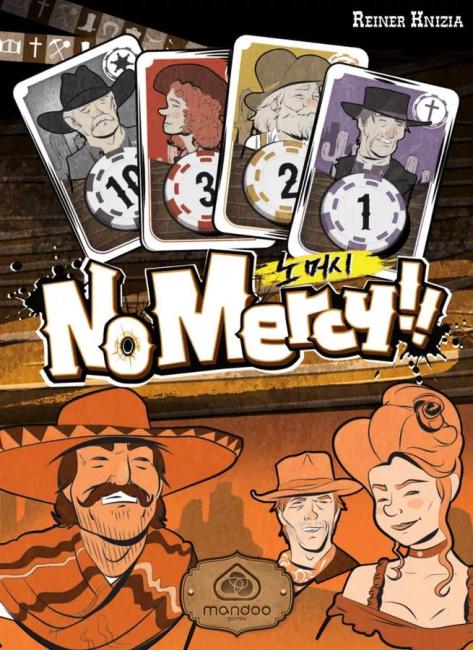
Fruit Fight (which has also been released as No Mercy and HIT!) is a press-your-luck game in which you draw cards to get points — but you don't want to draw too often because then you might lose all your gains!
In more detail, the 90-card deck contains eleven cards each numbered 1-5 and seven cards each numbered 6-10. On a turn, you flip over a card from the deck and place it in front of you, stealing (if you wish) all the cards of the same number that are in front of other players. You can stop after each draw, or you can draw another card. If you draw a number that you already have lying in front of you — and you have at least three cards in front of you — then you discard all cards in front of you from the game.
At the start of your turn, if you have cards in front of you, place them face down in a personal score pile, then start your turn. When the draw pile is exhausted, all players place all the cards they have in front of themselves in their score piles, then they tally the numbers on all their scored cards. Whoever has the highest sum wins.
Minimum Age: 8
Minimum Players: 2
Maximum Players: 5
Boardgame Atlas: Link
|
Pixie Games |
American West, Card Game |
2021 |
1 |
|
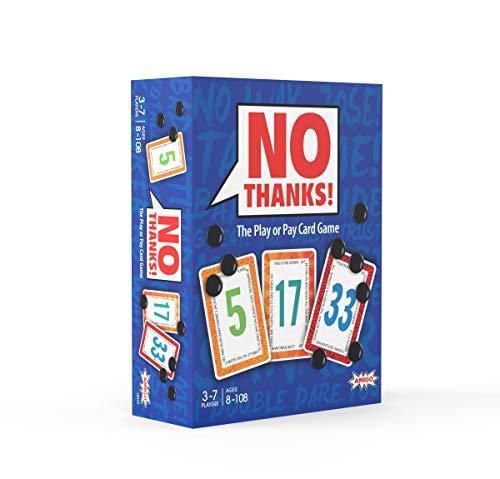
No Thanks!
It sounds so simple, and it is: Take a card or pay one chip. If you take the card you get its points, but points are bad. But you also get the chips that others have played, and that's good (each chip nullifies one point). So say, "No thanks!" and play your chips, but watch out: When you're out of chips that card's all yours.
Minimum Age: 8
Minimum Players: 3
Maximum Players: 7
Boardgame Atlas: Link
|
Amigo Spiel |
Card Game |
2004 |
1 |

|
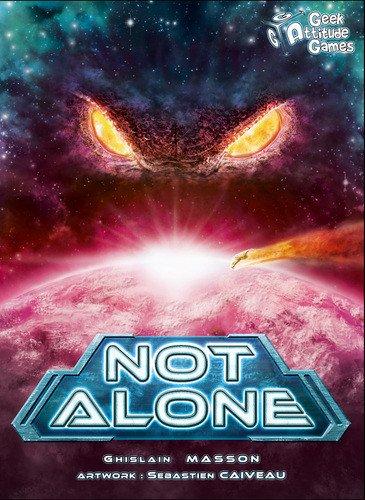
Not Alone
It is the 25th century. You are a member of an intergalactic expedition shipwrecked on a mysterious planet named Artemia. While waiting for the rescue ship, you begin to explore the planet but an alien entity picks up your scent and begins to hunt you. You are not alone! Will you survive the dangers of Artemia?
Not Alone is an asymmetrical card game, in which one player (the Creature) plays against the rest (the Hunted).
If you play as one of the Hunted, you will explore Artemia using Place cards. By playing these and Survival cards, you try to avoid, confuse or distract the Creature until help arrives.
If you play as the Creature, you will stalk and pursue the shipwrecked survivors. By playing your Hunt cards and using the mysterious powers of Artemia, you try to wear down the Hunted and assimilate them to the planet forever.
Minimum Age: 10
Minimum Players: 2
Maximum Players: 7
Boardgame Atlas: Link
|
Stronghold Games |
Sci-Fi, Strategy |
2016 |
1 |
|
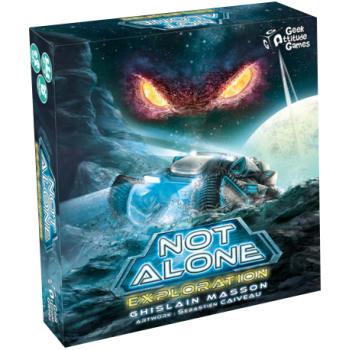
Not Alone: Exploration
NOT ALONE: Exploration, is the first expansion for NOT ALONE.
It includes new Hunt cards for the Creature, new Survival cards for the Hunted, and new Location cards for the planet. These 10 new Locations can be played together, or they can be mixed with Locations from the base game, giving NOT ALONE an almost infinite combination of places to explore. Come visit the planet Artemia again, if you dare, in NOT ALONE: Exploration.
Minimum Age: 12
Minimum Players: 2
Maximum Players: 7
Boardgame Atlas: Link
|
Stronghold Games |
Bluffing, Card Game, Expansion, Science Fiction |
2017 |
1 |
|
Notre Dame: 10th Anniversary
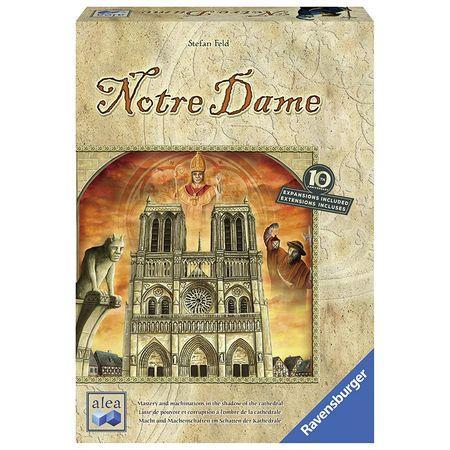
Notre Dame: 10th Anniversary contains the Notre Dame base game, the New Persons expansion that first appeared in the 2009 alea Treasure Chest, and a new "New Persons" set of nine characters.
In Notre Dame, players take on the roles of the heads of influential families in Paris at the end of the 14th century. In the shadow of the Notre Dame cathedral, the players compete for prosperity and reputation. Each family controls one of the 3–5 boroughs that surround the site of Notre Dame. As head of their family, each player tries — through clever use of their action cards — to advance the power and prestige of their family, but penalties are assessed on those who do not take care of the health of the people who live in their borough. The player with the most prestige at the end wins.
The "New Person" expansions allow for more variety during gameplay since these characters make different actions available to the players.
Minimum Age: 10
Minimum Players: 2
Maximum Players: 5
Boardgame Atlas: Link
|
Ravensburger |
Economic, Renaissance |
2017 |
1 |

|
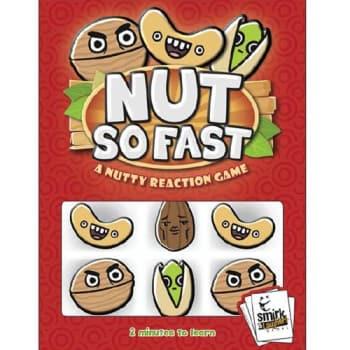
Nut So Fast
You gotta be lightning fast in the wildly nutty party game Nut So Fast! Flip two cards and watch for exactly four matching nut pictures. If you see a set of four, grab the nut token with the same face right out from under other player's noses! But "nut" so fast because if a number card appears, players instead need to strike the correct nutty pose.
Minimum Age: 8
Minimum Players: 3
Maximum Players: 6
Boardgame Atlas: Link
|
Smirk and Dagger Games |
Action, Dexterity, Party Game |
2018 |
1 |
|
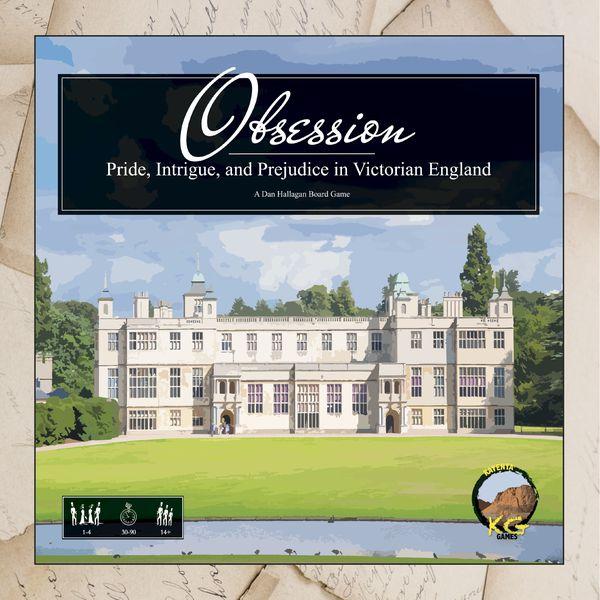
Obsession
Victorian England, 1840. You are the head of a respected but financially troubled family estate; rooms are closed off to save on upkeep and heating, outside grounds have gone to seed, and the façade is in desperate need of restoration.
It is far from the glory days of the estate, but you have new hope. A significant inheritance has made possible the restoration of the grand old manor house and rehabilitation of the family's reputation in the county of Cambridge.
Obsession captures the experience of Regency and Victorian England—the beloved world of Jane Austen & Anthony Trollope—in a way that transports family and friends to that unique time and place.
Minimum Age: 13
Minimum Players: 1
Maximum Players: 4
Boardgame Atlas: Link
|
Kayenta Games |
Post-Napoleonic |
2018 |
1 |

|
Obsession: Upstairs, Downstairs
An expansion for Obsession that introduces four new servants—the Hall Boy, Cook, Head Housemaid, and Useful Man—who can be used to mitigate Victorian Fate found in the base game.
It also enables 5 and 6 players and adds the Howard family with their legendary cook.
Upstairs, Downstairs includes new service and improvement tiles along with a ton of new casual and prestige guests. The expansion components empower players to screen guests, work around prestige limitations, find tiles, refresh the market more easily, and enhance favors early in the game.
Finally, there are three new game modes: Solo Estate Challenge, Team Cooperative Play, and Tableau Obsession.
Minimum Age: 13
Minimum Players: 1
Maximum Players: 6
Boardgame Atlas: Link
|
Kayenta Games |
|
2020 |
1 |

|
One-Hit Heroes

One-Hit Heroes is a co-operative boss battle game where your team has only one HP! This card game is designed to keep the tense decisions of heavier co-op games while being more accessible to families with a lean setup, 20-minute battles and a 1-HP system that relies on clever aggro and card play to stay alive. Defeating more bosses unlocks new cards for your Armory, which introduces new synergies and increases variety for subsequent playthroughs.
Each boss has a custom deck of moves to overcome your team, but each hero starts with a fully-unique deck filled with tools for outmaneuvering the boss with blocks, dodges and damaging moves.
When you first open the box, your Armory will be empty. So you'll need to defeat bosses to unlock curated card packs filled with loot. These cards power up your Heroes and specialize them into roles on the team. Unlocked cards permanently upgrade your Armory to deepen your drafting options each game. But in order to defeat the final boss of each Episode, you'll need more than just a refined deck — you'll need to play your cards carefully and work as a team to survive long enough to win.
Each turn has four phases: SCOUT, where you reveal the Boss's next move; FIGHT, where you play up to three cards; REST, where you redraw to five cards and clear your playing space; and SURVIVE, where you resolve the Boss Turn. When your life hangs by a thread, you want to defeat the boss before it has time to land a lucky hit - however, each damage you deal…
Minimum Age:
Minimum Players: 1
Maximum Players: 4
Boardgame Atlas: Link
|
Wiggles 3D |
Adventure, Card Game, Fighting |
2025 |
1 |
|
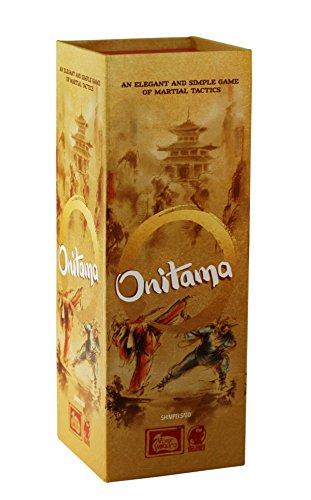
Onitama
Onitama is a two-player, perfect information abstract game with a random starting set-up. On a 5x5 board, both players start with five pawns on their side, with the main pawn in the middle.
Each player has two open cards that each display a possible move for any of his pieces. There is a fifth card that cannot be used by either player. On a player's turn, he chooses one of his cards, moves one of his pieces according to the chosen card, then replaces the card he used with the fifth card. The other player then chooses one of his cards, moves accordingly, and exchanges that card with this fifth card — which is, of course, the card the first player just used.
Moving onto one of the opponent's pawns removes that pawn from the game. Taking the opponent's main pawn, or moving your main pawn into your opponent's main pawn's starting space, wins you the game.
Minimum Age: 8
Minimum Players: 2
Maximum Players: 2
Boardgame Atlas: Link
|
Arcane Wonders |
Abstract, Ancient |
2014 |
1 |